
ALWEFAQ
National Islamic Society has issued a strongly worded statement condemning the unprecedented campaign of restrictions imposed during this year's Ashura commemorations in Bahrain, accusing the authorities of carrying out systematic measures targeting religious rituals, community institutions, and participants throughout the sacred season.
According to the statement, this year's Ashura witnessed "an unprecedented package of violations" that included summons for questioning, arrests, restrictions on Hussainiyas and mourning processions, and measures affecting Hussaini reciters, clerics, and administrators of religious institutions.
Al-Wefaq stressed that these actions disrupted long-established religious activities and prevented dozens of individuals from performing their customary religious duties.
The society rejected official claims that the measures were intended to regulate the observances, asserting instead that the restrictions reflected a deliberate policy of control over every aspect of Ashura.
"The practices carried out by the authorities are not intended for organization," the statement said, adding that the objective was "to restrict the season, shackle it, dominate every detail of it, and obstruct its observance."
Questioning the rationale behind the measures, Al-Wefaq asked why numerous reciters and preachers had been prevented from carrying out their religious roles, why permissions and conditions were reportedly imposed through telephone calls, why mourning processions faced restrictions until the seventh night of Muharram, and why participants were prohibited from displaying images of their religious authorities.
The statement further added that these policies form part of what it described as "a comprehensive campaign against the country's indigenous Shia community."
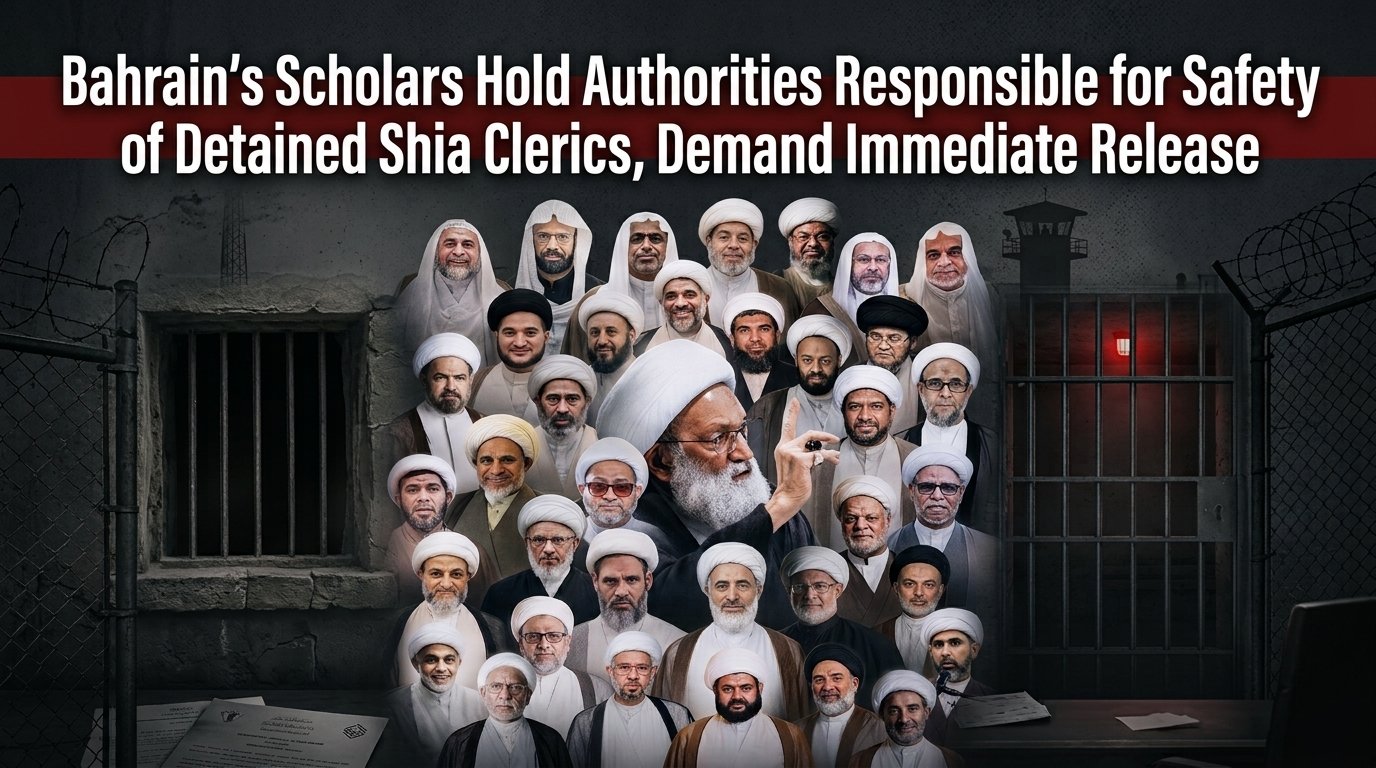
It linked the Ashura restrictions to broader allegations involving the arrest of religious scholars, state intervention in religious affairs, restrictions on religious endowments, sectarian discrimination, citizenship revocations, and what it characterized as campaigns of incitement and hate speech.
In parallel, Al-Wefaq praised participants who continued to observe Ashura, expressing appreciation for those who preserved the commemorations "despite threats, directives, and continuous intimidation" that it said had affected the spiritual atmosphere of the occasion.
Calling on citizens to continue exercising their legitimate religious rights, the society maintained that the restrictions are inconsistent with Bahrain's Constitution and incompatible with international human rights obligations protecting freedom of religion and peaceful assembly.
The statement concluded by stressing that lasting stability cannot be achieved through coercive governance.
"Any authority that respects itself and adheres to the principles of justice would never confront its own people in such a hostile manner," Al-Wefaq said.
It further asserted that Bahrain requires "a just and balanced political system," including "a government that represents the people, a genuine parliament reflecting the popular will, and fair policies founded on coexistence, equal opportunities, and balanced governance."
The statement was issued by Al-Wefaq on 1 July 202